
By Sheri Hansen | March 19, 2026

Clockwise from top left: Alicia Belton, FAIA, NOMA, Aaron Kelly, AIA, Alissa D. Luepke Pier, AIA, and Matt Johnson, AIA. Photo credits below.
2025 PRINT ANNUAL
This interview appeared in the 2025 ENTER print annual, available for purchase here.
What skills and perspectives do architects bring to their service in local government, on planning commissions and selection committees, and in other civic leadership roles? ENTER sat down with four Minnesota architects to find out.

Photo by Ron Son.
Alicia Belton, FAIA, NOMA
Hennepin County Designer Selection Committee
Title: Committee Chair
Tenure: 2008–present
Other civic involvement: Capitol Area Architectural and Planning Board (2017–24)
Alicia Belton, founder of Urban Design Perspectives, chairs the Hennepin County Designer Selection Committee. In this role, Belton brings an architect’s technical knowledge and design-thinking and consensus-building skills to the evaluation of project proposals, helping ensure that the county creates buildings and community assets that will stand the test of time.
“We’ve evaluated hundreds of proposals over my tenure on the committee,” she says. “It’s always important to think about the strengths not only of the design team’s previous project work but also of the skill set that team will bring: What special value will they add to the project and the community beyond what’s on paper?” she says. “Value beyond design thinking, moving into the broader system, is what I and the rest of the committee bring to evaluating projects for the county to make sure we get the best outcomes.”
Belton has served in many public roles over the course of her career, all while running her own firm. Giving back to the community has always been important to her, but she says she gains as much from her volunteerism as she gives. “Getting to use my gifts in important ways—in the work of community planning for the future—has helped me see where things are headed and improve my own practice,” she says. “I also find it enjoyable. It’s energizing to see the county putting its sustainability and equity goals into practice in the built environment, and to be able to help them do that.”
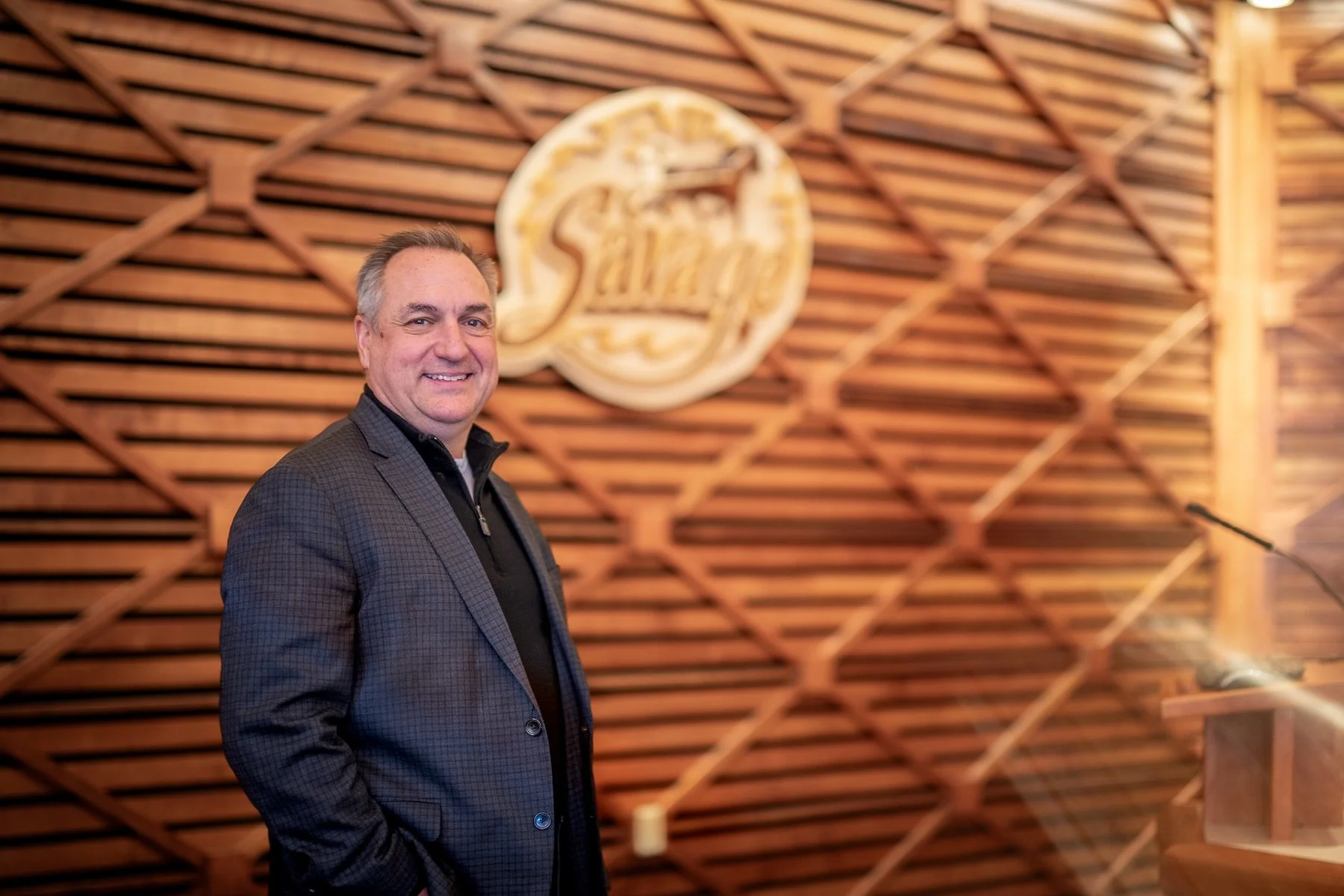
Photo by Chad Holder.
Matt Johnson, AIA
Savage City Council
Title: Councilmember
Tenure: 2016–present
Other civic involvement: Savage Planning Commission
Matt Johnson, a director and senior project manager with Nelson Worldwide, is serving his third term on the Savage City Council. Johnson’s design-thinking skills are an asset to his community. Listening and problem solving—cornerstones of the design process—are essential tools in keeping the wheels of local government turning. “Architects listen to their clients,” he says. “Then we try to translate their needs into something tangible. Oftentimes, we’re the interpreter.”
“Over the years on the council, I’ve had several opportunities to use my ‘architect brain,’” says Johnson. “For example, we had an opportunity to move beyond what was going to be a simple road easement extension to a broader vision for a mixed-use development that our community really needed. I was able to help our stakeholders see beyond simply doing what they had always done to thinking about how a road could lead to new housing and businesses near essential services—new development that will be an important part of our economy for decades.
“I love to help my community plan for the future,” he continues. “Right now, we’re looking at how to develop a mix of housing that reflects the likely population shifts in age demographics. It’s fun to think about that and help create a vision for what’s next for our city. We can help our current residents feel good about who we are and where we live and build a city that they want to stay in and are proud to call home.”

Photo by Mark Fitzgibbons.
Aaron Kelly, AIA
Duluth Area Chamber of Commerce
Titles: Chair and Vice Chair, Board of Directors
Board tenure: 2020–2025
Other civic involvement: APEX Board of Directors
Aaron Kelly, government studio leader at LHB, was involved with the Duluth Area Chamber of Commerce for more than seven years, including terms as chair of its board of directors and vice chair. In these roles, he focused on strengthening connections between the building industry, its clients, and local government to help streamline entitlements, improve trust, and clarify relationships during a time of significant redevelopment.
“In partnership with others in the AEC industry, we worked with city government leaders on things like permitting process improvements, code interpretation, and communication improvements,” says Kelly. “We dug in with all the stakeholders to establish common expectations and make sure everyone understood how things were happening in the field with inspectors. Since architects are often the ones who bridge the disciplines on a project, our skills are very useful in settings like this where we need to open lines of communication and build trust. I was proud to help with that effort.”
Kelly and the chamber also worked to expand community understanding of the impact of the built environment on civic life. For one, they brought Doors Open—a citywide event that offers free, behind-the-scenes access to notable buildings and sites—to Duluth last fall. “We struggle at times to be seen as an architecture community,” says Kelly. “I hope my work with the chamber helped increase awareness of what architects can do to make a city better.”

Photo by Farm Kid Studios.
Alissa D. Luepke Pier, AIA
Robbinsdale Area Schools
Title: Director of Architecture and Planning
Tenure: 2022–present
Past civic involvement: Minneapolis Planning Commission
Alissa Luepke Pier, who recently served for more than a decade on the Minneapolis Planning Commission, is now the director of architecture and planning for Robbinsdale Area Schools. In addition to the responsibilities included in her job title, Pier leads community engagement work, aiding the superintendent in developing the vision and long-term plan for the school district.
“A lot of my work both in public service and as an architect has helped prepare me to make this community engagement effort impactful and equitable,” says Pier. “When architects start a design project, they don’t begin with any predetermined outcomes in mind; they start by figuring out what problems they need to solve. Really, what we’re trying to do in the school district is no different.”
“Architects are also used to juggling all the systems and expertise that come together to make a building work,” she continues. “The same skills apply in bringing different points of view to bear along with different data points.”
Pier describes her process as one that brings all voices to the table, explores all options, embraces creative thinking at every turn, and sometimes leads to surprising results. “Whether you’re designing a building or a strategic plan, the key is to fully understand all the issues and perspectives—to really dig into the ‘why’ beyond the ‘what,’” she says. “Our Robbinsdale team will bring that open, equitable approach to this engagement as well, to improve the experience for everyone who engages with the district in the years to come.”
Related Articles

