Mentorship Modernized
What does mentorship in architecture mean in an era of specialization, screen sharing, and shorter deadlines? In Minnesota, an AIA St. Paul task force is exploring how intentional, reciprocal mentorship may be the profession’s most important investment in its future.
By Elizabeth Thomas, AIA | June 18, 2026

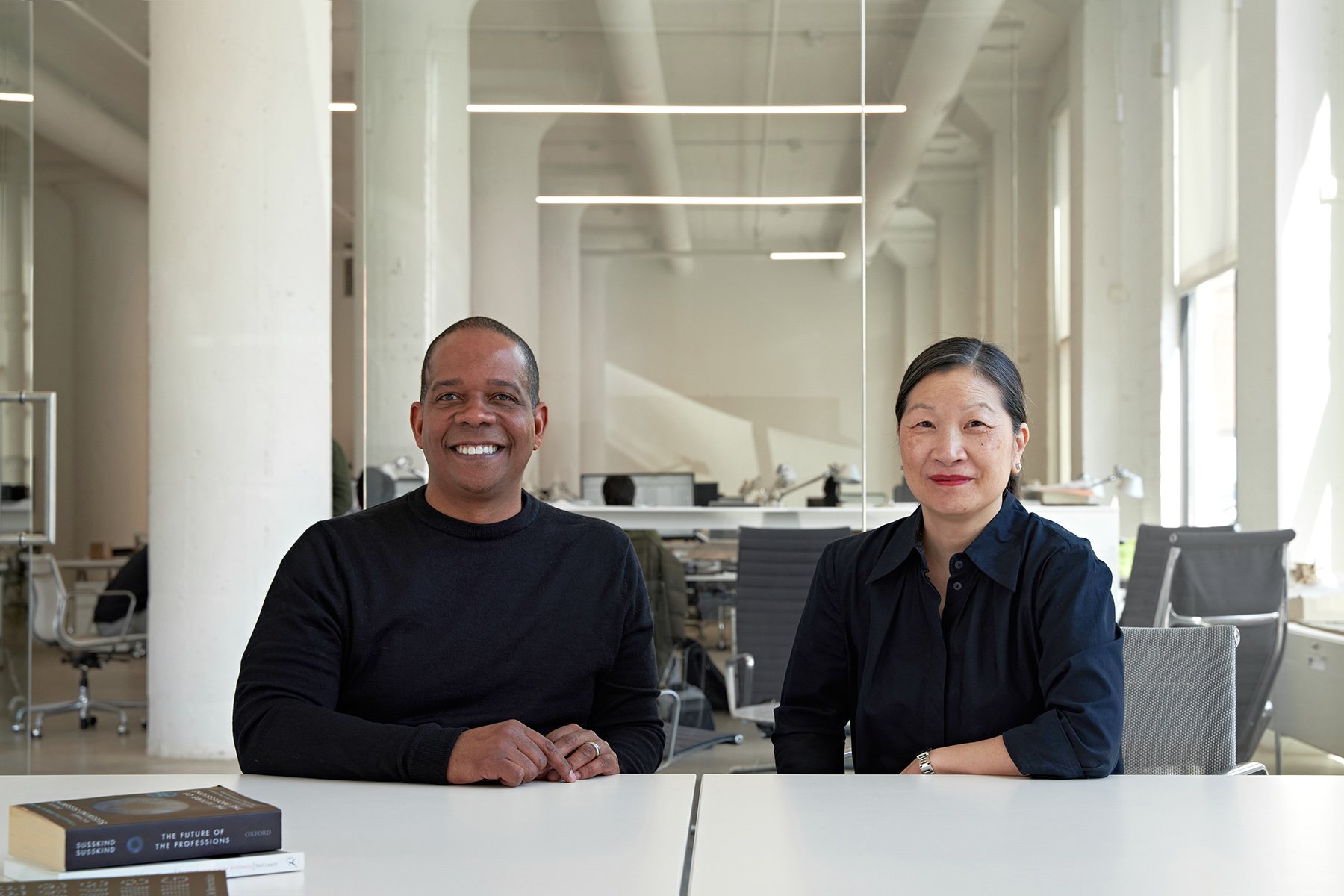
Facing the camera: Two of the four AIA Minnesota Next Gen Initiative co-leaders, Nicole Bauknight, Assoc. AIA, NOMA (left), and Nathan Anderson, AIA (right), and AIA St. Paul Mentorship Task Force member Constance Chen, AIA (center). Photo by Chad Holder.
2026 ENTER PRINT ANNUAL
This feature appears in the 2026 ENTER print annual, available for purchase here.
As a profession, architecture has been built on a history of mentorship and apprenticeship. Dating back to the time of master builders, designer-builders who oversaw both design and construction, knowledge was passed down through direct experience, observation, and sustained guidance. The profession relied not only on individual talent, but on continuity—on the willingness of those with experience to teach, and those without it to learn. Mentorship was not separate from practice. It was the foundation of it.
Over the years, this model evolved into more formalized relationships in both education and professional practice. In school, students work in cohorts, spending long hours in shared studio spaces where ideas are tested through critique and conversation. They learn not only from faculty, but from one another. While projects are typically individually authored and evaluated, the studio environment itself is collective, shaped by dialogue, observation, and the steady exchange of feedback.
Practice reflects a similar dynamic. Emerging professionals enter the field with foundational knowledge, but much of their development happens in proximity to others, through redlines, meetings, and the gradual assumption of responsibility. Mentorship is often informal, embedded in daily work rather than structured as explicit instruction. Over time, individuals are expected to transition from learners to leaders. When that transition lacks clarity or consistency, confidence gaps can persist, even as expectations continue to rise.


Photos 1 and 2: AIA St. Paul Mentorship Task Force members and AIA Minnesota Next Gen Initiative co-leaders in conversation. Photos by Chad Holder.
A growing gap has emerged between traditional expectations of practice and the values of a new generation of architects and designers. For decades, commitment to the profession has often been measured through endurance—the belief that project delivery comes at all costs, and that long hours, personal sacrifice, and constant availability are necessary components of professional growth. These norms have been reinforced by systems that define success primarily through measurable output, particularly billable hours and schedule adherence, leaving mentorship and long-term development less explicitly rewarded. Over time, such expectations have contributed to burnout, delayed licensure, and professionals questioning whether long-term sustainability in the field is possible for themselves and their peers.
Increasingly, over the past decade, this model has been reexamined. There is a growing conversation around what healthy, sustainable practice should look like. Newer generations of both emerging professionals and firm leaders remain committed to the rigor and responsibility that architecture demands while questioning professional structures that reward overextension as evidence of commitment. They advocate for environments that support both professional growth and personal well-being, arguing that flexibility, transparency, and intentional development are not concessions, but prerequisites for sustaining talent within the profession.
“The beauty of mentorship is the discovery on both sides. Each mentorship is unique, in that if you let it, it can evolve into its own creation and sometimes never conclude, resulting in a lasting supportive relationship.”
Nicole Bauknight, Assoc. AIA, NOMA
AIA Minnesota Next Gen Initiative leader
Within this shift, mentorship plays a critical role. Effective mentorship does more than transfer technical knowledge—it makes thinking visible, cultivates judgment, and builds the confidence required to lead. By creating space for questions, uncertainty, and incremental responsibility, it supports meaningful professional growth. When mentorship is intentional and consistent, individuals are more likely to feel secure in their development and prepared to assume greater responsibility. In turn, the profession strengthens its leadership pipeline and its capacity to adapt in a changing landscape.
Taking the Time
At the center of this conversation and the Next Gen Initiative are AIA St. Paul Mentorship Task Force co-chairs Dantès Ha, AIA, NOMA, and Nicholas M. Reiter, AIA, NOMA. The task force emerged from what Ha describes as “a personal frustration.” After a decade in practice, he recalls, “I still didn’t feel confident stepping fully into the role of architect. And when I started asking around, I realized I wasn’t alone.” Many capable professionals, he found, quietly question their readiness to lead.
That realization prompted a broader question: If architecture has long relied on apprenticeship, what does that model look like today? For Ha, part of the answer lies in how practice itself has changed.
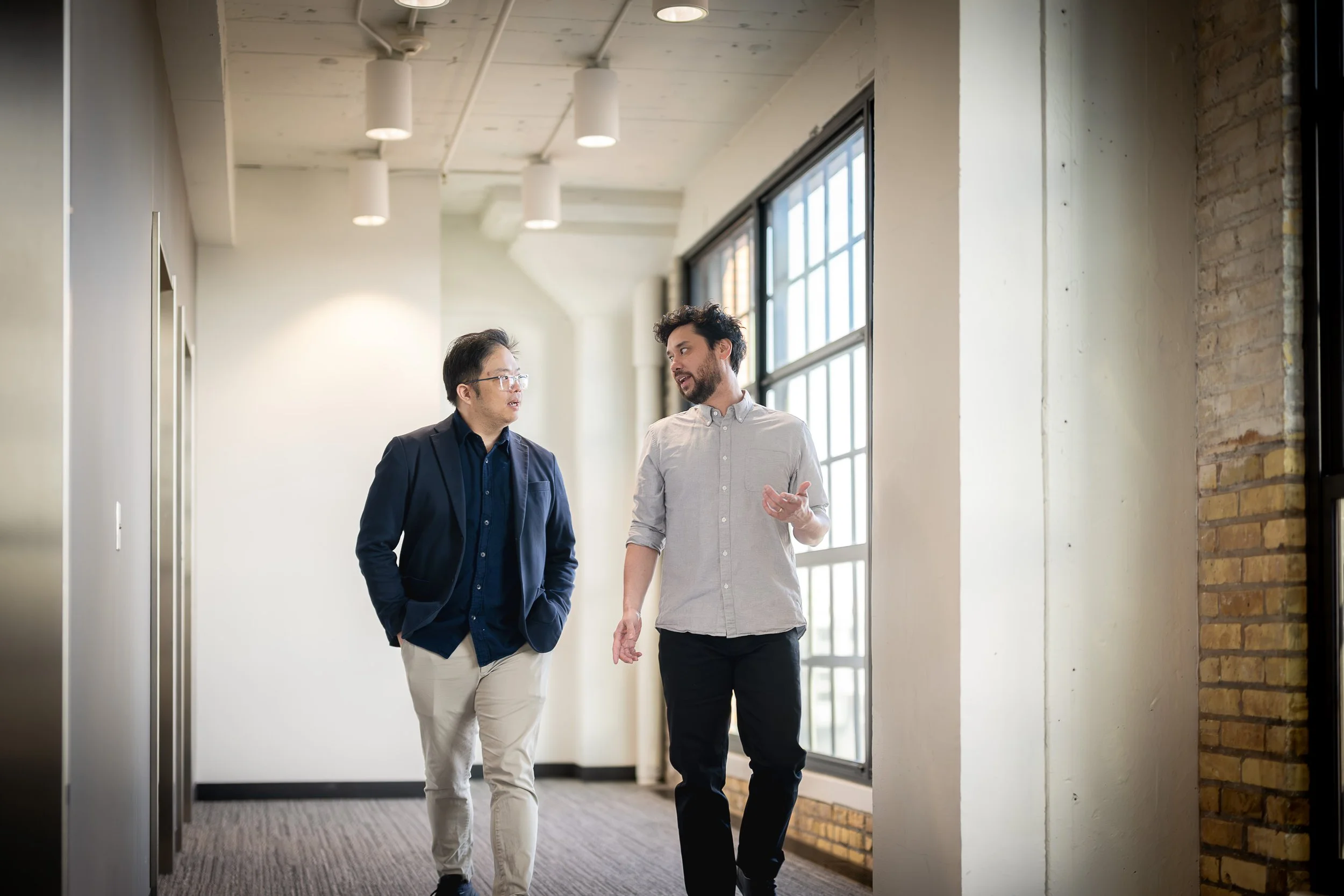
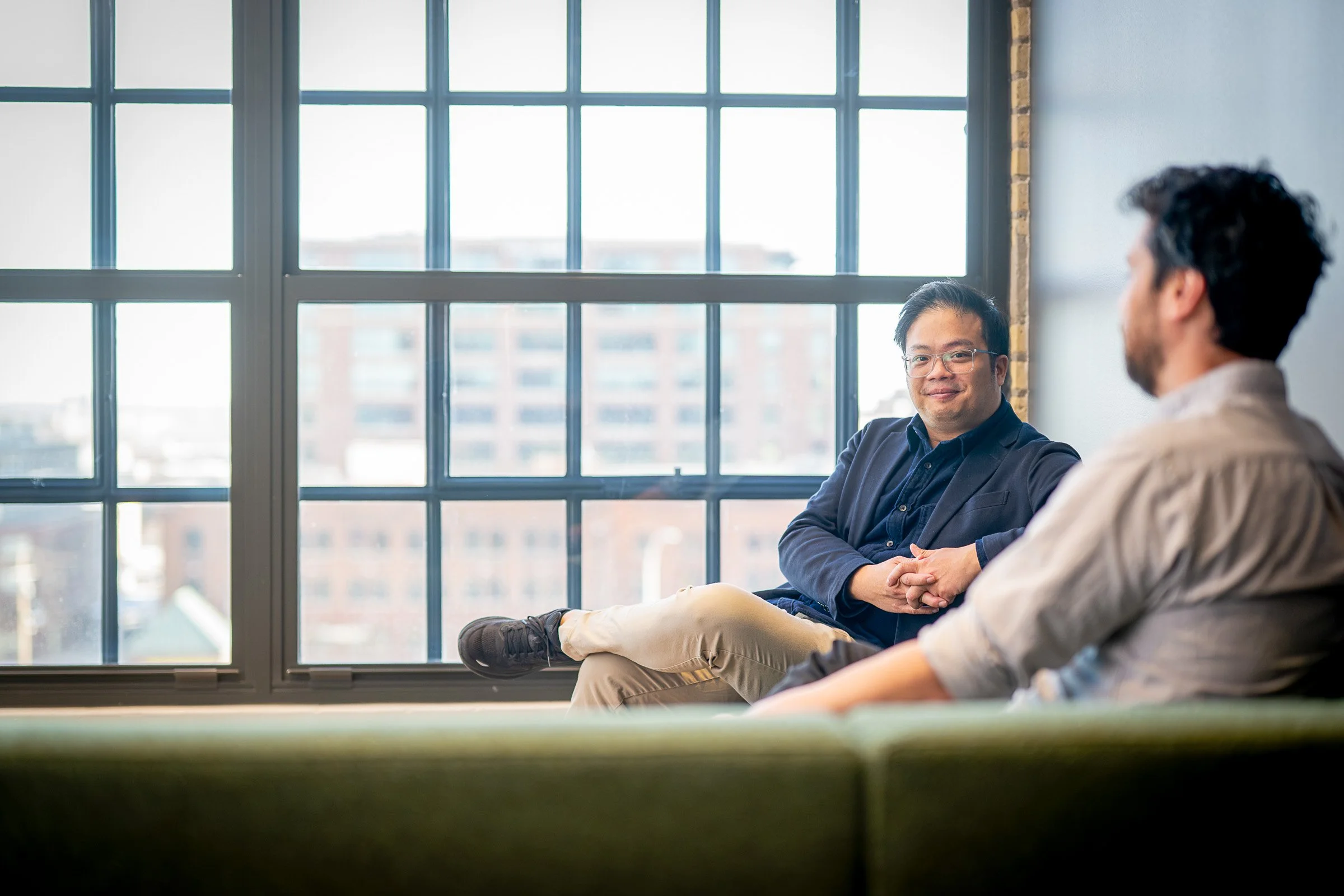
Photos 1 and 2: AIA St. Paul Mentorship Task Force co-chairs Dantès Ha, AIA (left), and Nicholas M. Reiter, AIA. Photos by Chad Holder.
“Technology has quietly fractured the apprenticeship model,” Ha explains. Where architects once drew side by side, learning through shared tools and physical proximity, mentorship now often happens over shared screens and virtual meetings. “The lesson for me is the same,” he adds. “Mentorship isn’t about the medium. It’s about taking the time to explain your thinking.” Yet in deadline-driven environments, the time required to explain that thinking, to unpack decisions and model judgment, is often the first thing to disappear.
Reiter sees similar shifts in practice. As projects have grown more complex, specialization has deepened, narrowing the range of exposure many architects receive early in their careers. At the same time, emerging professionals too often confront a jarring transition from school to practice. “You come out of school ready to do amazing, world-class work,” he reflects, “and you find that you don’t know code, can’t detail, have no idea what a budget is, or how the process works to get even a simple project through bureaucratic red tape.” As roles narrow and expertise becomes more segmented, broad-based exposure to the full scope of practice becomes less common, with implications for confidence, authority, and the cultivation of future leaders.
Without mentorship, that gap can feel discouraging, not only for emerging professionals navigating early responsibility, but for architects at any stage who find themselves uncertain or overstretched. Ha emphasizes that growth in this profession takes time: “There’s no shortcut to becoming truly capable.” Mentorship makes that reality visible. It clarifies the path forward, offering reassurance that capability develops gradually and that others have navigated the same uncertainty.
“For me, mentorship is all at once a prompt, a conduit, and a ‘third space’ for learning what questions to ask about your daily work and professional trajectory. It can work in either direction because every generation of architects seeks to answer these larger questions of purpose in a way that speaks to them.”
Ashley Vanden Bosch, AIA
AIA St. Paul Mentorship Task Force member
The Mentorship Task Force is also examining the structure of mentorship itself. While mentorship is often imagined as a top-down relationship, both co-chairs emphasize that meaningful mentorship flows in multiple directions. Reiter notes that “often, the more dynamic and fruitful relationships come in peer-to-peer mentorship or even mentoring up,” in part because “power structures, whether perceived or actual, are largely removed and conversations flow more freely.” In a profession shaped by specialization and rapid technological change, this reciprocity matters. Emerging professionals may introduce new tools or approaches, while experienced architects provide judgment and context. When mentorship is understood as reciprocal rather than hierarchical, it becomes more adaptive, and more reflective of how contemporary practice actually operates.
The group is encouraging firms to become more intentional about how growth happens—to modernize, rather than abandon, the apprenticeship tradition. Mentorship requires time, and time is not always directly billable. Yet Reiter emphasizes that the real impact lies in culture: “It’s about being intentional and committed to creating a culture where we all do better when we all do better.” When development is treated as foundational rather than incidental, junior staff gain confidence and capability earlier, and the profession strengthens its collective capacity to lead.
Breaking the Mold
Ultimately, mentorship shapes more than individual careers. It influences who feels empowered to lead, how expertise is developed, and whether architects see a future for themselves within the discipline. For those who feel disconnected from traditional pathways, Ha offers reassurance: “If you don’t see yourself reflected in the traditional mold, that might just mean the mold is outdated. The profession is evolving. Stay engaged long enough to help shape what it becomes. Break the mold and build your own!”
In that spirit, mentorship becomes more than preservation of tradition. It becomes a driver of the profession’s evolution. Architecture has always depended on the steady passing down of knowledge, judgment, and responsibility. Its future will depend on how intentionally leadership is cultivated, expertise is shared, and architects are prepared to meet the realities of contemporary practice.
Related Articles