
Minneapolis American Indian Center
With a program-centered renovation and expansion, the MAIC renews its role as a gathering place for Native culture, creativity, and connection
By Frank Edgerton Martin | February 19, 2026
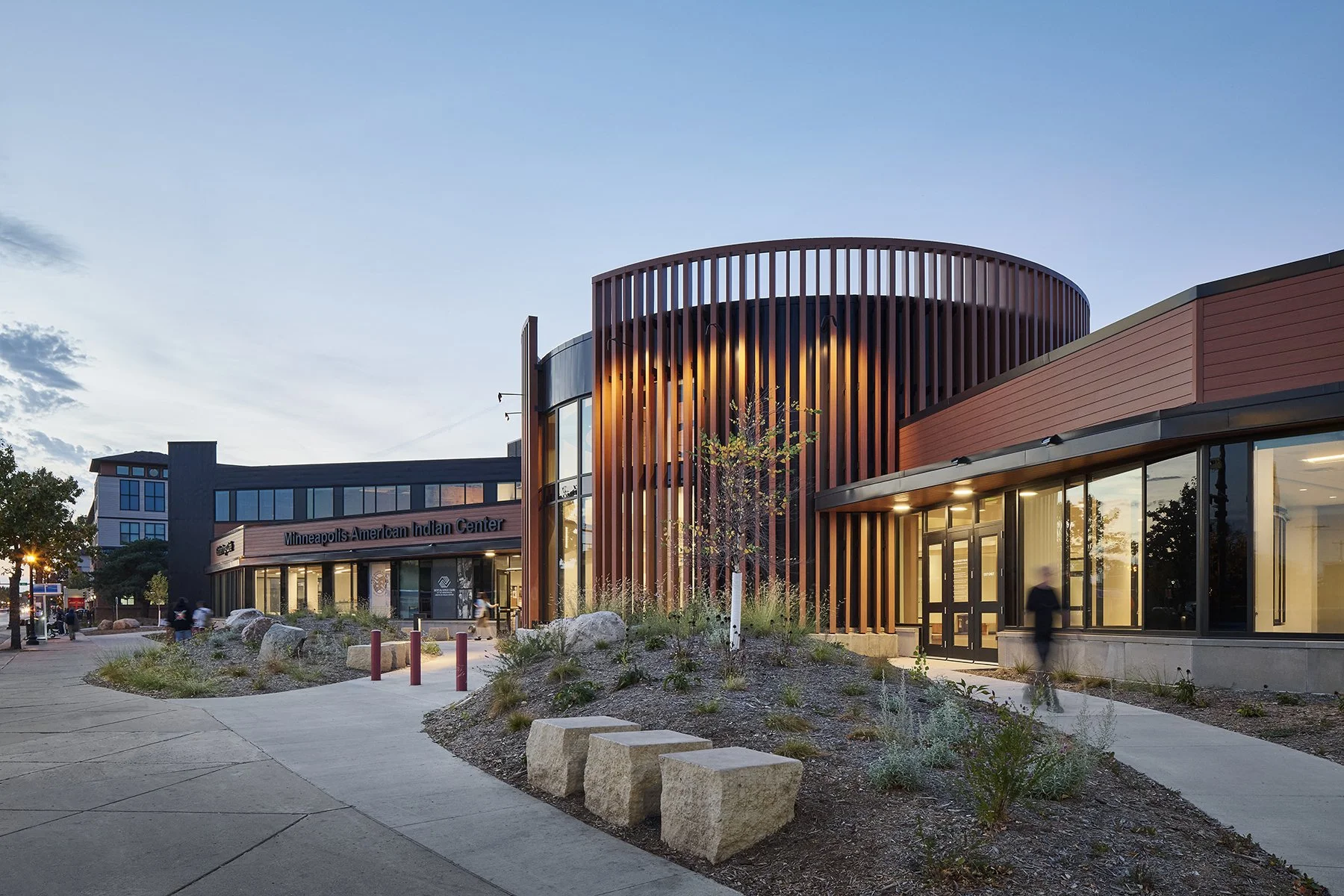
The renovation and expansion moved the front door to Franklin Avenue, placed a “drum” (rotunda) at the center of the facade, introduced wood tones, and increased the building’s transparency. Photo by Peter VonDeLinde.
SPOTLIGHT
This article appears in the 168-page 2025 ENTER print annual, available for purchase here.
Fifty years after opening, the Minneapolis American Indian Center (MAIC) is returning to its roots as a home for Native arts and community. A recently completed renovation and addition to the building supports expanded public programming and visibility. In the late 1960s, after generations of violent tribal removal, containment, and forced assimilation, the Twin Cities emerged as an international beacon of Indigenous culture and resistance. The American Indian Movement was founded in 1968 in Minneapolis’s Phillips neighborhood near where the MAIC would eventually be built.
“Resilience is the real story here,” says Full Circle Indigenous Planning + Design’s Sam Olbekson, AIA, AICAE, NOMA. “Bringing culture back was a priority of that generation of community leaders.” The MAIC opened in 1975 with a focus on Native food, language, art, traditional dancing, community gatherings, and intergenerational connections. But over the years, the organization turned inward, offering vital social services, with limited capacity for meetings or events.
The program-driven renovation and expansion adds 19,300 square feet to the original 66,100-square-foot structure and transforms nearly the entire building with more openness, much needed flexible meeting spaces, and a new façade that reaches out to Franklin Avenue with outstretched wings. The “drum” at the center is a rotunda with interior views into public spaces for recreation, food and arts programming, and gathering.
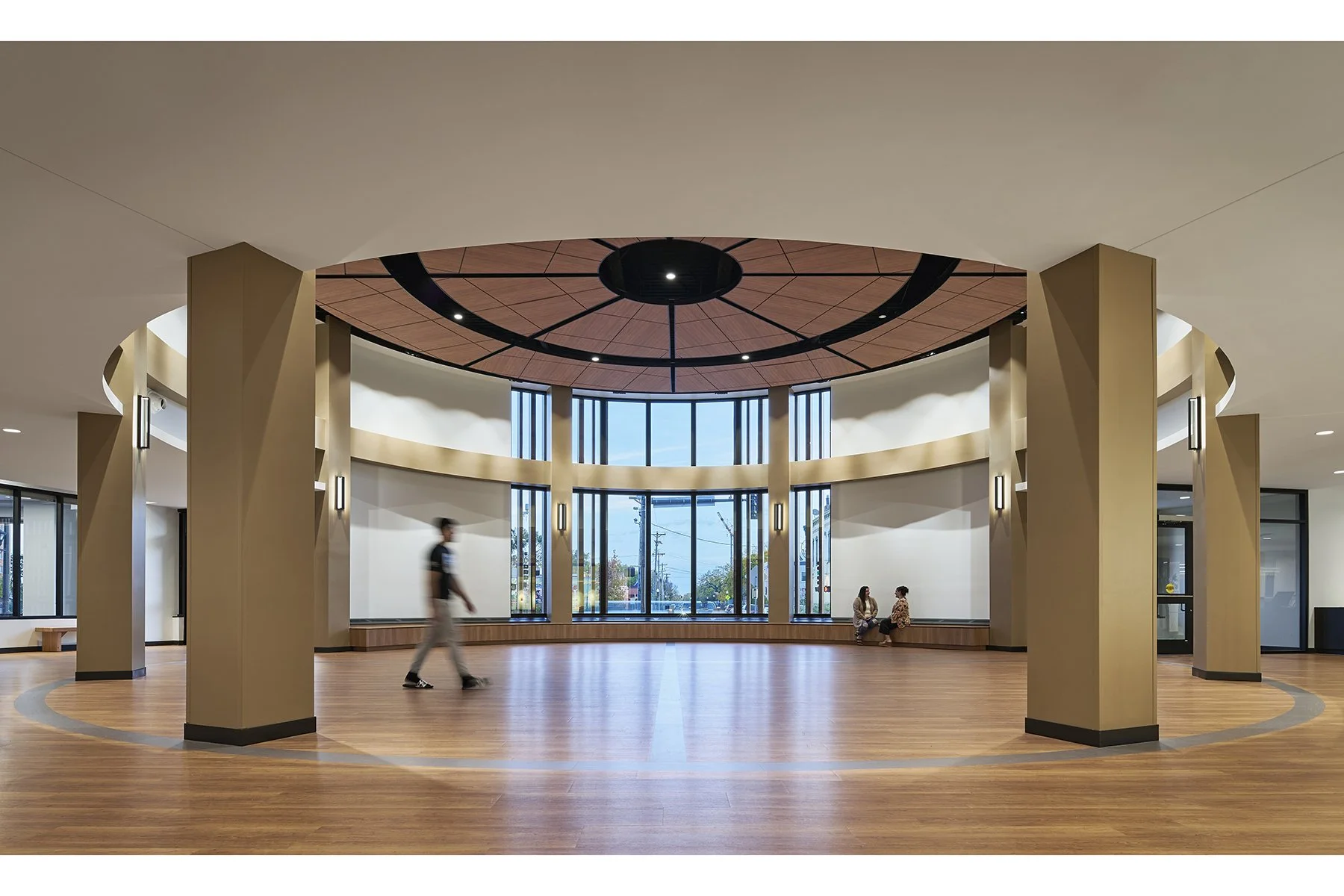
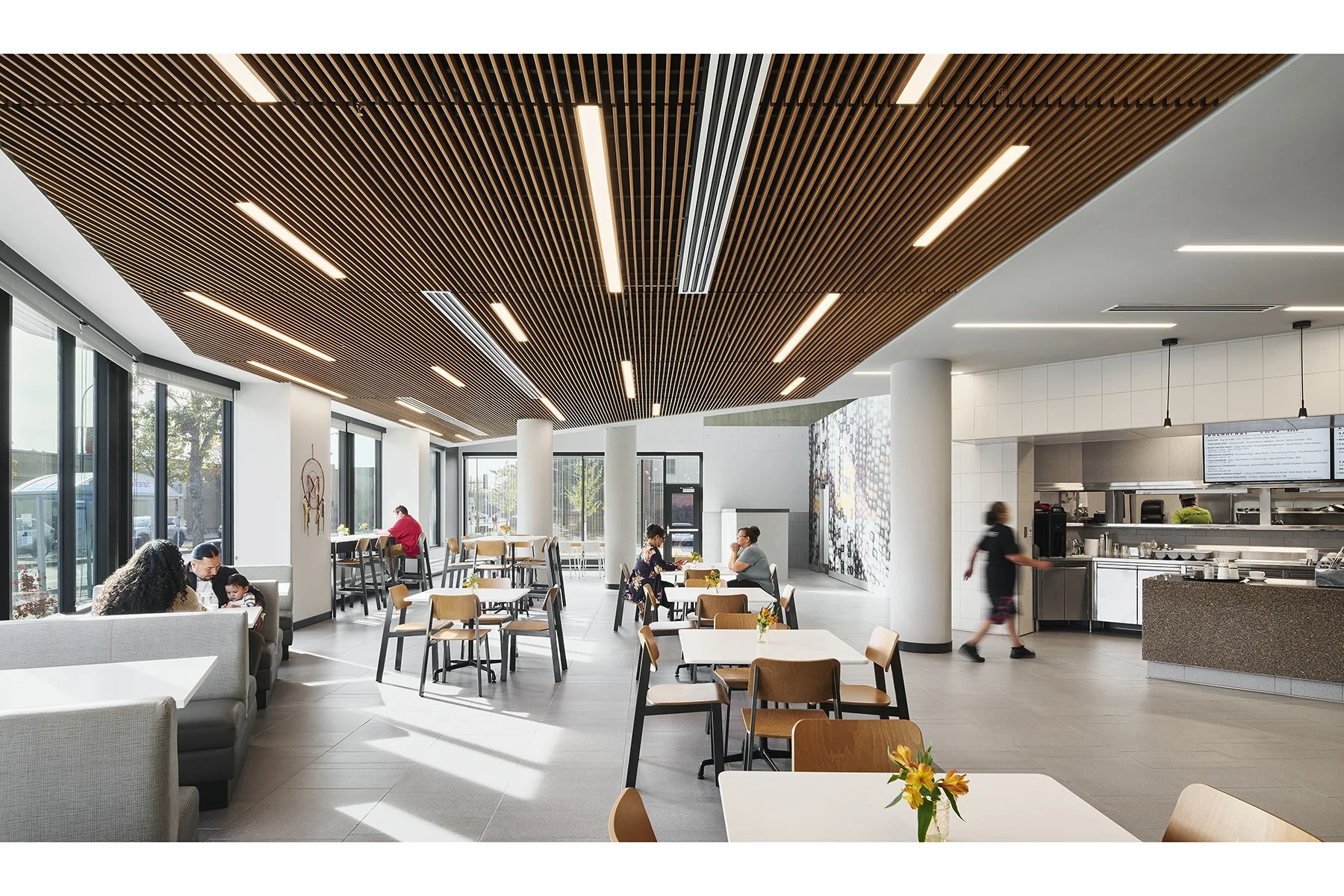
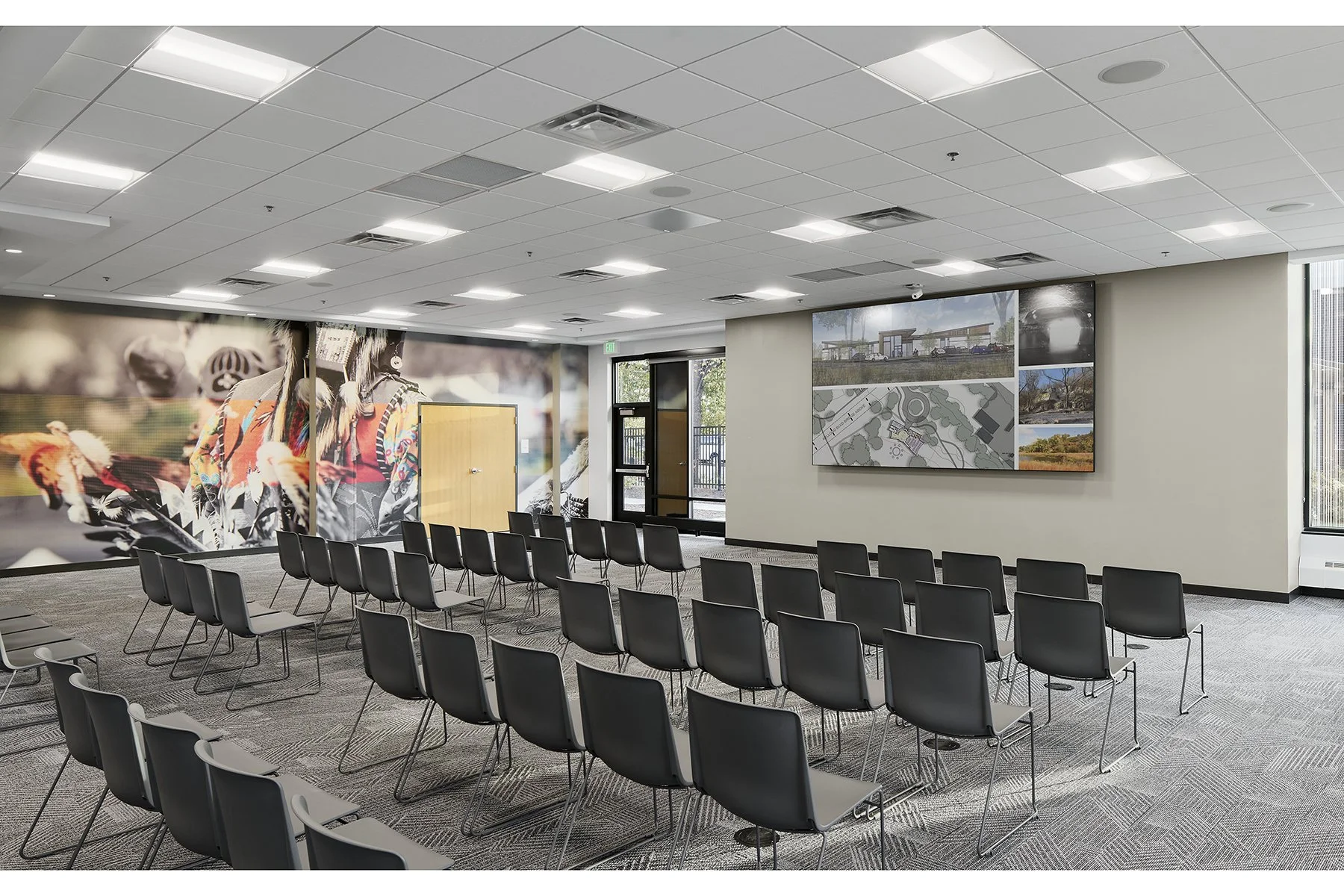
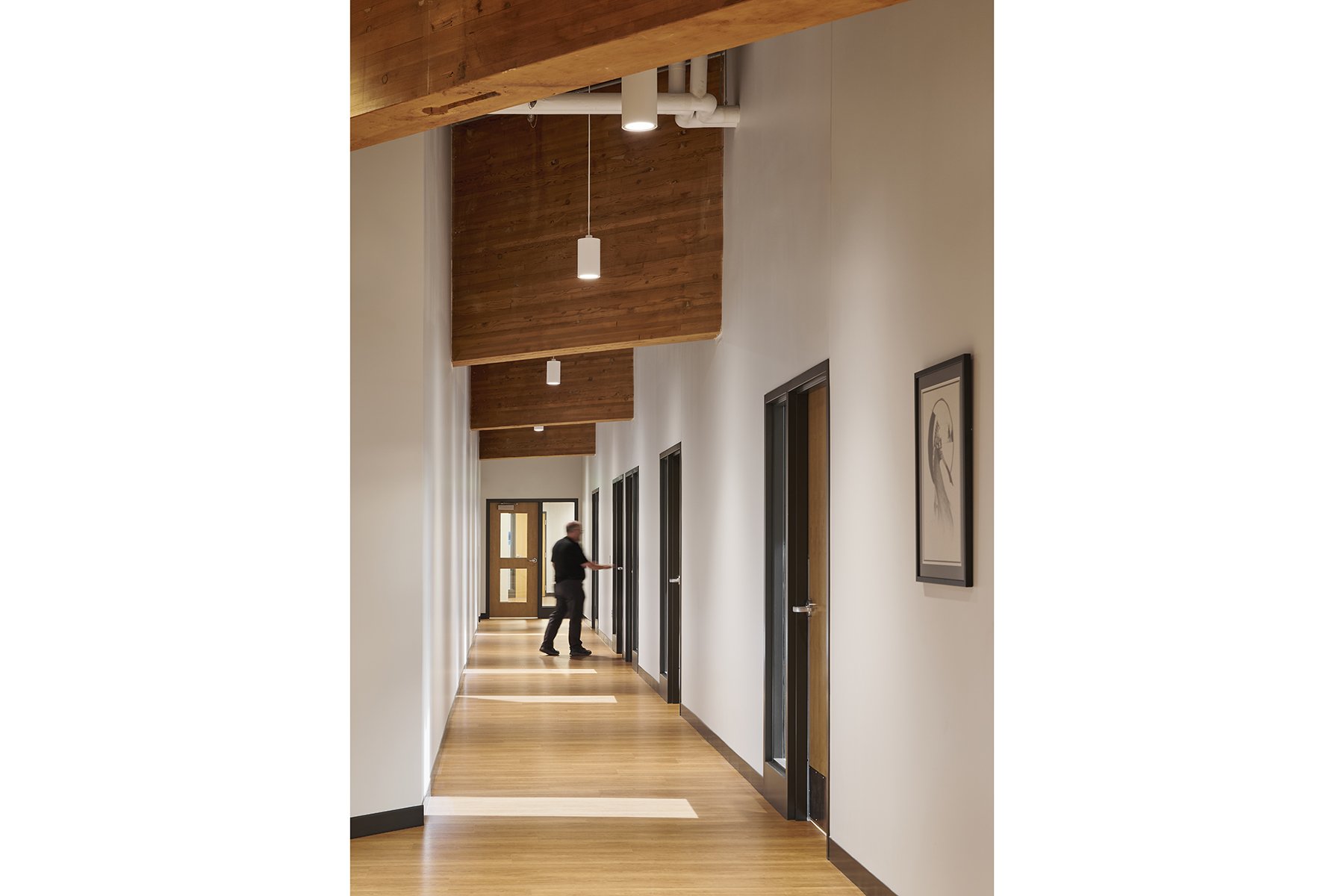
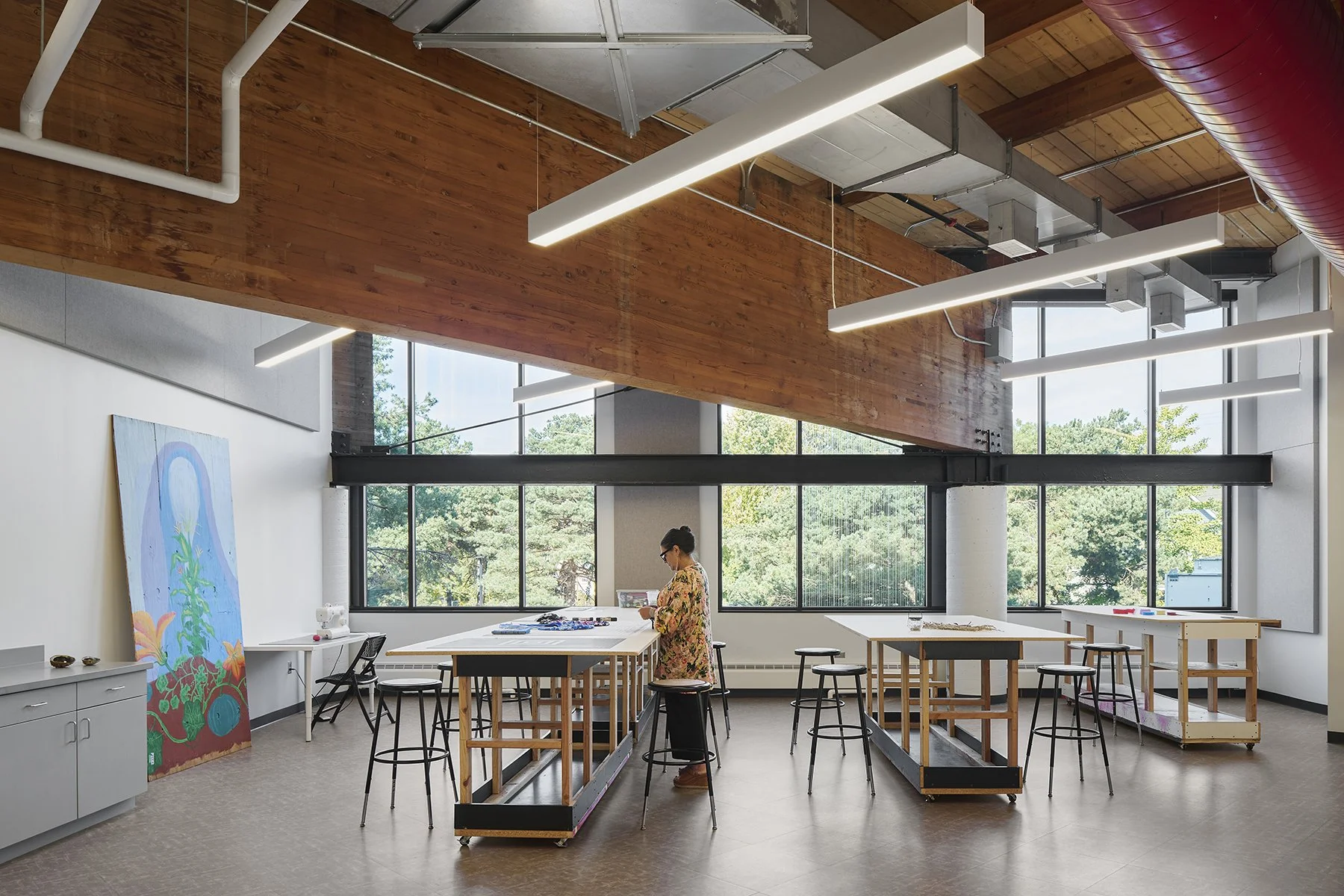
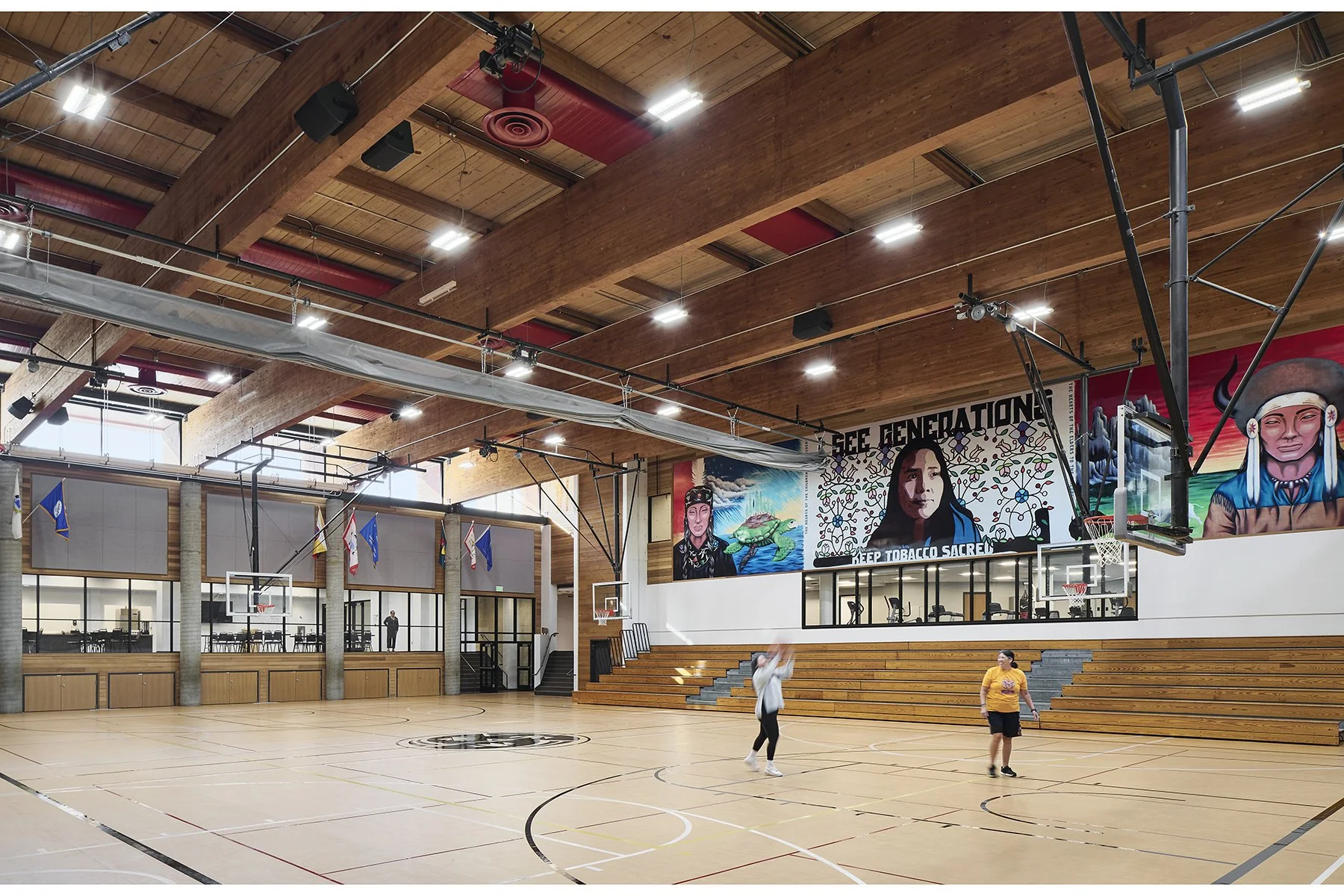
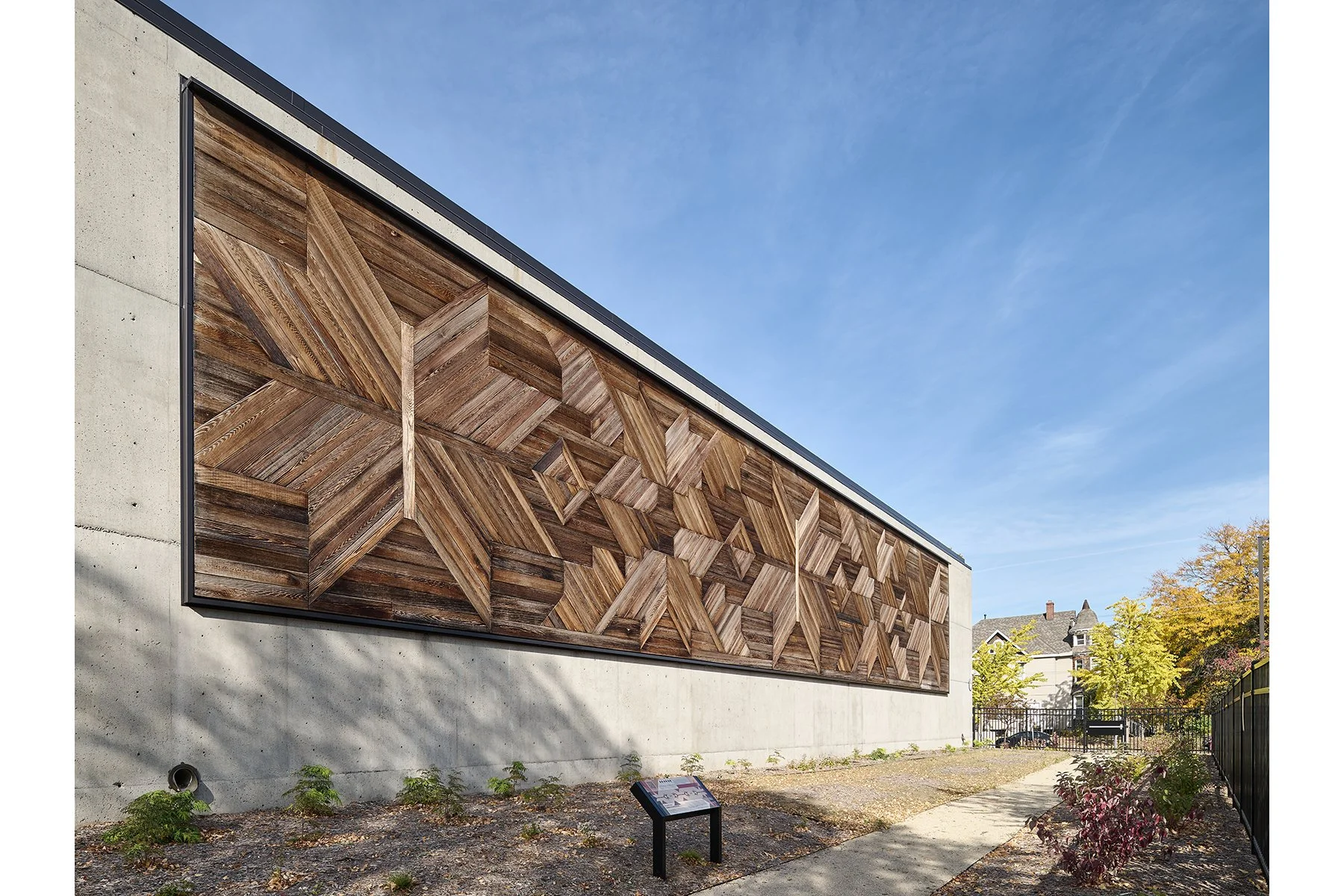
Photo 1: The light-filled entry rotunda orients visitors to spaces for dining, recreation, and art. 2: Gatherings Café along Franklin Avenue serves healthy meals using Indigenous ingredients. 3: New meeting and presentation spaces accommodate a range of group sizes. 4: The renovation preserved the glulam beams in Thomas Hodne’s 1975 design. 5: The diagonal glulam beams contribute to the creative atmosphere in the Art Studio. 6: Exterior murals from the building’s east wall were photographed and reproduced in the gym. 7: The George Morrison mural was carefully restored and reinstalled on a new exterior wall. Photos by Peter VonDeLinde.
The design weaves layers of Indigenous modernism with contemporary lighting, windows, and finishes. While the building may appear to the first-time visitor to be seamlessly updated, a closer look reveals underlying modernist details and materials preserved from Thomas Hodne’s original design.
Opening day in May 2024 drew more than 2,000 community members and representatives from all 11 Native tribes in Minnesota. The MAIC continues to provide an array of community services in nutrition and fitness, job training, and support for families. But now, there are many more reasons to visit.
Mary LaGarde, MAIC executive director
“Our mission hasn’t changed; what has changed are the spaces and programs for community members. Our building today helps us to raise ourselves on our own power and strength rather than rely on social services.”
Sam Olbekson, AIA, AICAE, NOMA, Full Circle Indigenous Planning + Design
“We wanted a modern building that expressed a strong and resilient urban Indigenous community. When I was young, I took traditional dance classes here. By the time I was 15, with a shift to social services, there were fewer reasons to come. Now, the center is able to bring back expanded services, offering rich cultural programming, many spaces to gather, and activity options for all people in our community.”
Eric Lagerquist, AIA, Cuningham
“The challenge was to update the building to today’s energy and life safety codes while respecting its importance to the community. The team’s focus was on making sure that the identity of the original building was visible and providing opportunities throughout for culture to be expressed.”
Design Snapshot
Location: Minneapolis, Minnesota
Architects: Full Circle Indigenous Planning + Design and Cuningham
Interior designer: Cuningham
Completion: 2024
Material highlights: Exposed concrete, glulam beams, and repurposed wood
The Minneapolis American Indian Center project team included Full Circle Indigenous Planning + Design, Cuningham, Emanuelson-Podas, Reigstad Engineers, BKBM Engineers, and Loeffler Construction & Consulting.
Related Articles
